Is Postpartum Hair Loss Normal?
Yes — postpartum hair loss is one of the most common, most predictable, and most under-talked-about parts of the fourth trimester. It's medically known as postpartum telogen effluvium, and it affects an estimated 40 to 50% of women to a noticeable degree, with milder shedding happening to nearly everyone who's given birth. If you're standing in the shower watching what feels like a small animal's worth of hair swirl down the drain, your first instinct might be panic. The good news: in the vast majority of cases, this isn't hair "loss" in the permanent sense at all. It's a delayed, concentrated shed of hair your body was holding onto during pregnancy — and it's designed to grow back.
Postpartum shedding is not the same as pattern hair loss or a thinning condition. It's your body releasing hair it never shed during pregnancy, all at once, on a delay. For almost every mom, this is temporary and fully reversible.
Why Postpartum Hair Loss Happens
During pregnancy, elevated estrogen levels extend the growth (anagen) phase of your hair cycle and suppress the normal resting-and-shedding phase (telogen). That's why so many moms describe their hair as thicker, shinier, and fuller than ever during the third trimester — you weren't growing more hair, you were simply shedding less of it than usual for nine months.
After delivery, estrogen and progesterone levels drop sharply — one of the steepest hormonal declines the body experiences at any point in life. That sudden drop signals a large percentage of hair follicles to shift into the telogen (resting) phase all at once. Hair in the resting phase doesn't fall out immediately; it sits in the follicle for roughly two to three months before it finally releases. That built-in delay is exactly why the shedding doesn't show up the week after birth — it shows up months later, which can catch new moms completely off guard.
The Postpartum Hair Loss Timeline, Stage by Stage
Every mom's timeline shifts slightly, but the pattern is remarkably consistent. Here's what typically happens, and when:
The Calm Before the Shed
Hair often still looks full or even thicker than pre-pregnancy in these early weeks. This is the delay period — follicles have already shifted into the resting phase, but the hair hasn't released yet. Some moms notice nothing unusual at all during this stretch.
Shedding Begins
Most moms notice the first real uptick in hair loss around the 3-month mark — more hair in the brush, on the pillow, and clogging the shower drain. This is the classic onset point clinicians point to, and it's often the moment moms start to worry that something is wrong.
Peak Shedding
Hair loss tends to peak around four months postpartum. This is usually the most alarming stretch — it can genuinely look and feel like a lot, especially around the hairline and temples, where shedding is often most visible.
Shedding Slows
For most moms, the intensity of shedding noticeably eases by month five or six. It doesn't stop overnight — it tapers gradually as more follicles cycle back into their normal growth pattern.
Regrowth & the "Halo" of Baby Hairs
This is when new growth becomes visible — a fringe of short, wispy new hairs around the hairline and temples that can look frizzy or stick straight up. It's a good sign, even though it's an awkward one. Most moms see their hair return to its normal fullness and texture by the time their baby turns one.
Time to Take a Closer Look
If noticeable shedding is still ongoing a full year after birth, or if fullness never seems to return, it's worth talking to a doctor about other possible causes rather than assuming it's still "just postpartum."
It's worth noting that this timeline can shift depending on when your cycle returns, whether you're breastfeeding, and your individual hormone patterns — so a few weeks earlier or later than these markers is still completely within normal range.
How Much Hair Loss Is Actually Normal?
On an average day, it's normal to shed somewhere between 50 and 100 hairs simply through the natural growth cycle — you just don't usually notice it because it's spread throughout the day. During peak postpartum shedding, that number can climb noticeably higher, and because it's concentrated (a big clump in the shower, a thick strand in the brush) rather than spread out, it tends to look far more dramatic than it actually is in terms of total hair lost.
A helpful way to gauge it: postpartum shedding is usually diffuse, meaning it thins hair somewhat evenly across the whole scalp, most noticeably at the hairline and temples. What it typically does not do is create bald patches, sharply defined bare spots, or a receding pattern in one specific area. That distinction matters a lot when it comes to knowing what's normal and what deserves a closer look — more on that below.
What Can Make Postpartum Shedding Heavier or Longer-Lasting
Several factors can intensify or extend typical postpartum hair loss beyond the average window:
- Iron deficiency or postpartum anemia — blood loss during delivery, especially with a longer or more complicated birth, can leave iron stores low, and low iron is one of the most common medical contributors to prolonged hair shedding
- Thyroid changes — postpartum thyroiditis, a temporary (and sometimes not-so-temporary) inflammation of the thyroid, affects a meaningful percentage of new moms and can cause hair loss that lasts well beyond the typical six-to-twelve-month window
- High stress and sleep deprivation — chronic stress can independently push more hair follicles into the shedding phase, compounding the hormonal shed that's already happening
- Rapid or significant weight loss — crash dieting or very fast postpartum weight loss can trigger its own round of telogen effluvium on top of the hormonal one
- Nutrient gaps, especially while breastfeeding — protein, iron, zinc, and vitamin D all play a role in hair cycling, and breastfeeding increases the body's nutritional demands
- Tight hairstyles — constant ponytails, buns, or braids add mechanical stress (traction) to hair that's already in a vulnerable, resting phase
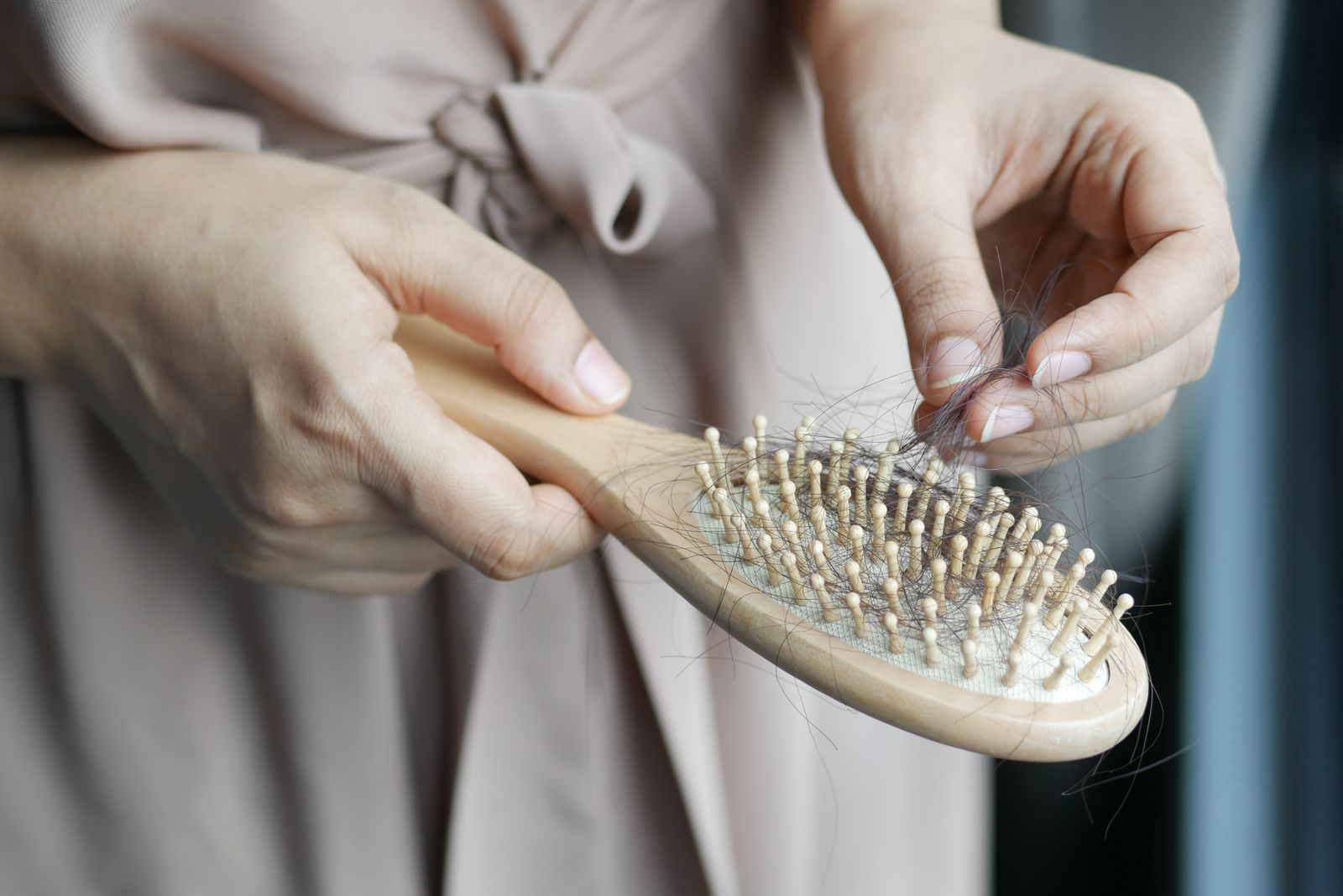
So many moms in our community describe the exact same moment — brushing their hair around month four and staring at a brush that looks like it belongs to someone else entirely. It's genuinely startling the first time it happens, even when you technically know it's coming. If this is where you are right now: your hair is not falling out because something is wrong with you. It's doing something it's supposed to do, on a delay that nobody warned you about.
What Actually Helps
You can't stop postpartum shedding entirely — it's a hormonal process, not a cosmetic one — but you can support healthy regrowth and minimize how dramatic it feels in the meantime.
Hair is at its most fragile when it's wet. Use a wide-tooth comb instead of a brush right after washing, and gently detangle from the ends up rather than the roots down.
Swap tight ponytails and slicked-back buns for looser styles, and give your hairline a break from constant tension while it's already under stress.
Hair is largely made of protein, and iron plays a direct role in the hair growth cycle. Continuing a prenatal or postnatal vitamin — with your doctor's okay — can help fill nutritional gaps, especially if you're breastfeeding.
This won't slow the shedding, but a lighter cut can make thinning far less visually dramatic and reduce the weight pulling on already-stressed strands.
Because this is hormonally driven, most topical products won't meaningfully change the timeline. Gentle scalp massage can support circulation and feel genuinely soothing, but the biggest factor in recovery is simply time.
When to See a Doctor
For most moms, this entire process resolves on its own by the time their baby reaches their first birthday. But there are specific signs that suggest something other than typical postpartum telogen effluvium may be at play, and those are worth bringing to a doctor or dermatologist:
- Shedding that's still heavy or ongoing past 12 months postpartum
- Bald patches or clearly defined bare spots, rather than diffuse, even thinning — this can point toward a separate condition like postpartum alopecia areata, an autoimmune process distinct from typical hormonal shedding
- Hair that never seems to be regrowing, with no visible "baby hair" fringe appearing around months six through twelve
- Other symptoms alongside the hair loss — persistent fatigue, unexplained weight changes, feeling unusually cold or hot, heart palpitations, or mood changes, which can point to thyroid dysfunction
- A family history of pattern hair loss, which can sometimes be unmasked or accelerated by the postpartum hormonal shift
- Scalp symptoms like itching, redness, flaking, or pain, which may indicate a separate scalp condition rather than telogen effluvium alone
⚠️ Don't wait it out indefinitely if something feels off. A simple blood panel checking iron, ferritin, and thyroid function can rule in or rule out the most common underlying causes, and it's a completely reasonable thing to request at your postpartum checkup — even if your provider doesn't bring it up first.
Your OB, midwife, or primary care provider can run basic labs and, if needed, refer you to a dermatologist. Bringing photos of your hairline or shedding over a few weeks can also help a provider assess the pattern more accurately than a single appointment snapshot can.
Postpartum hair loss is one more example of a fourth-trimester change that's rarely talked about honestly until it's already happening to you. It's common, it's temporary for almost everyone, and needing reassurance about it doesn't mean you're overreacting.
Your Body Is Doing a Lot Right Now
Alara Blooms helps you track your baby's patterns so you can find pockets of time to actually rest, eat, and take care of yourself while your body recovers.
Start Tracking Free